
Your Paying Subscribers Know Why Your App Grows. Ask Them — From Inside the App.

Updated 04 Oct 2026
Seabook identifies fish and marine life from a photo and keeps a dive log. Revenue had been flat for half a year. The category gets little search traffic, paid ads only work in season, and search ads kept bringing people who were looking for something else.
The founder had been deciding what to build on instinct. An experienced app founder told him to stop guessing and talk to the people who already pay. This post is how that advice became one in-app campaign — and what a product manager needs to decide to run the same thing.
What the subscriber sees
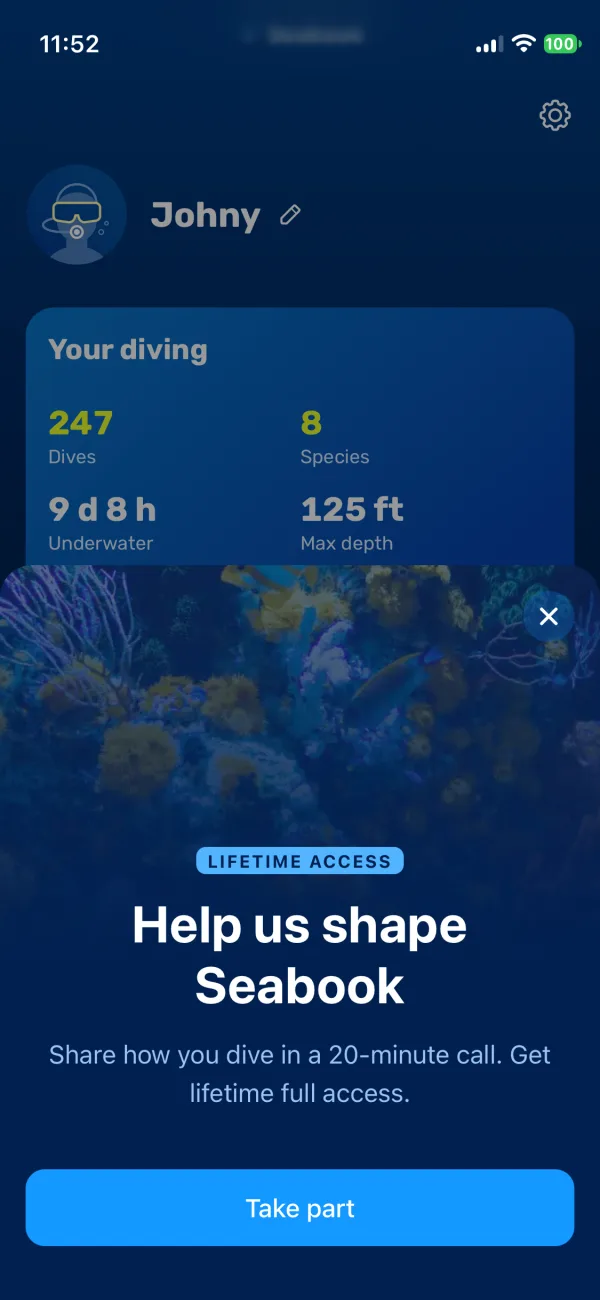
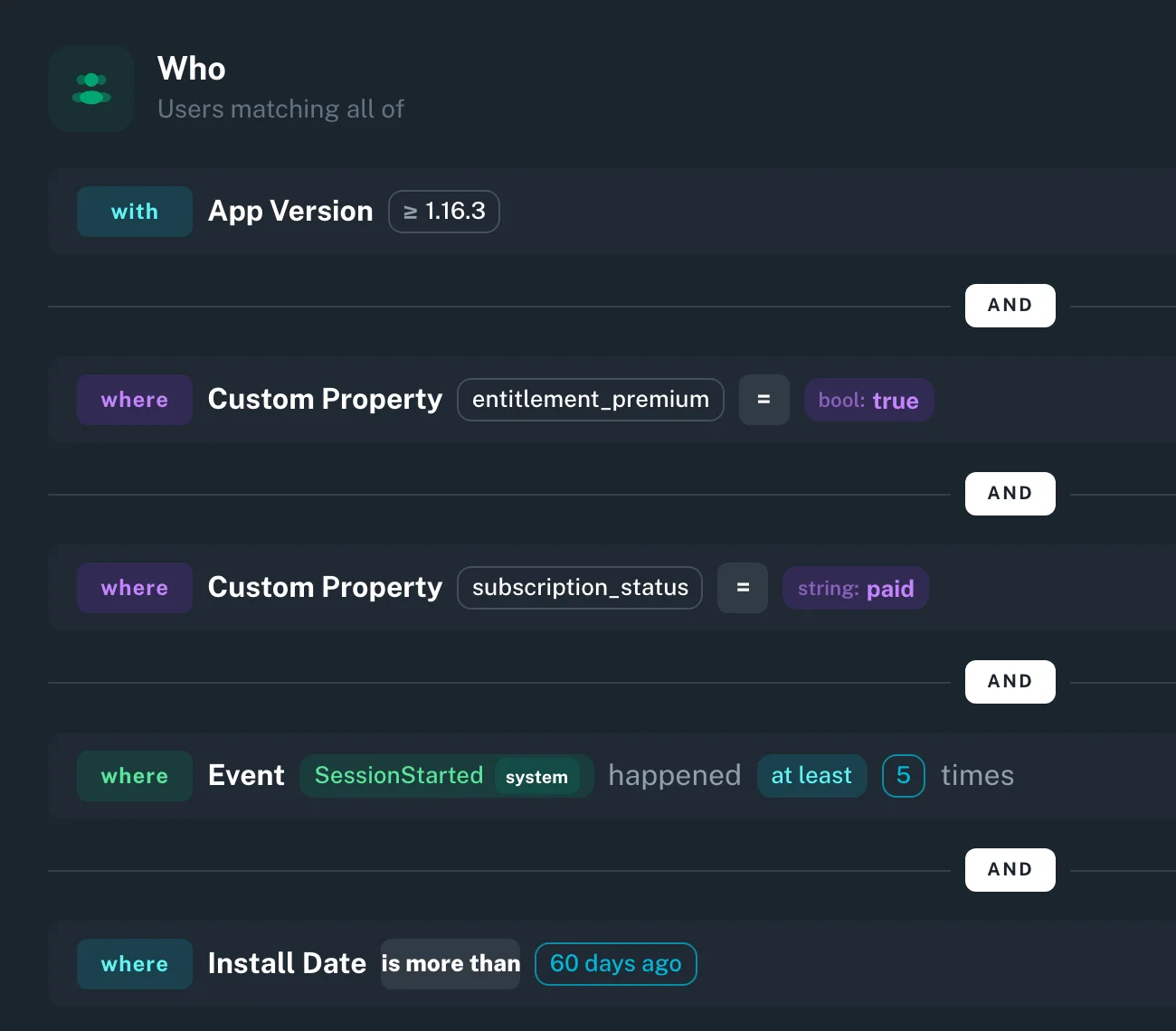
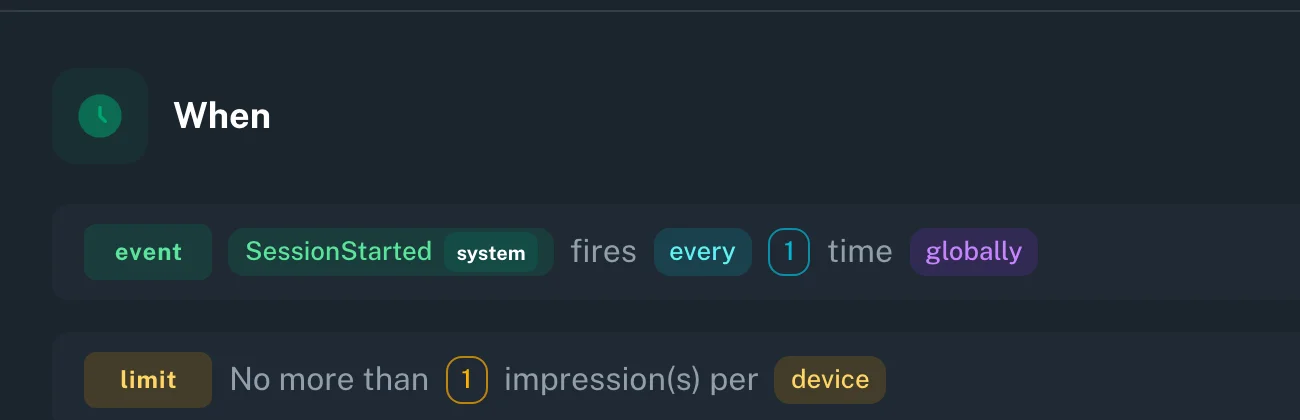
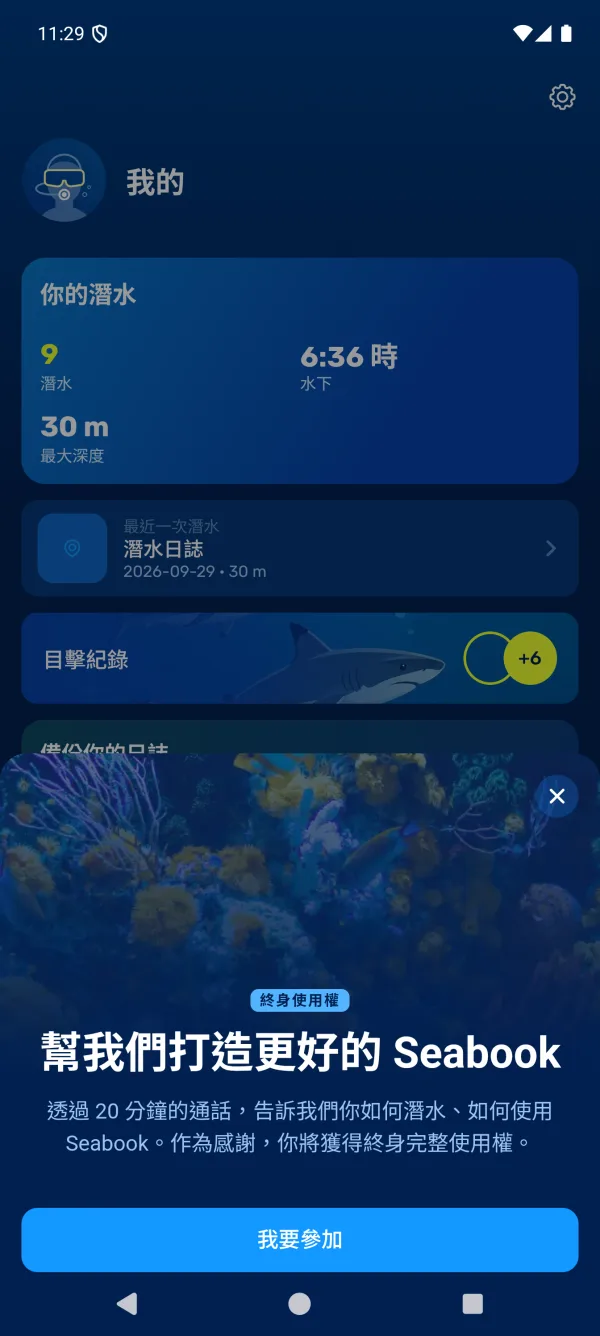
When a diver who pays full price and has opened Seabook at least five times starts the app again, a sheet slides up over it. It invites her to a 20-minute call about how she dives and uses the app, and offers lifetime full access as a thank-you. One button, “Take part”, opens an email to the team. A close button in the corner dismisses it, and she never sees it again.
Why paying subscribers, and why a conversation
Every change to onboarding, the paywall or the ads is a guess about why people come and why they stay. The people who can answer that already exist: they are the ones paying you.
- They already said yes. A trial user is still deciding. A full-price subscriber made the decision you want more people to make, and can tell you what tipped it.
- They describe the value in their own words. Those words belong in your store page, your ads and your onboarding.
- They reveal audiences you never planned for. Seabook's early signals were aquarium keepers and students heading into marine biology — neither was on the roadmap.
A survey only answers the questions you thought to ask. A conversation surfaces the ones you didn't.
Who to invite
Only people who pay full price and actually use the app. Trial and discounted users haven't committed yet, and occasional users don't know the product well enough to explain it.
What to offer
Lifetime full access, in exchange for 20 minutes. For a subscriber it is a real gift; for the app, one subscription costs far less than what one honest conversation teaches. Make the reward specific and say it in the first two lines.
When to ask
At the start of a session, never in the middle of a task, and only once. These are the users you can least afford to annoy, so dismissing counts as an answer.
Designing the invitation
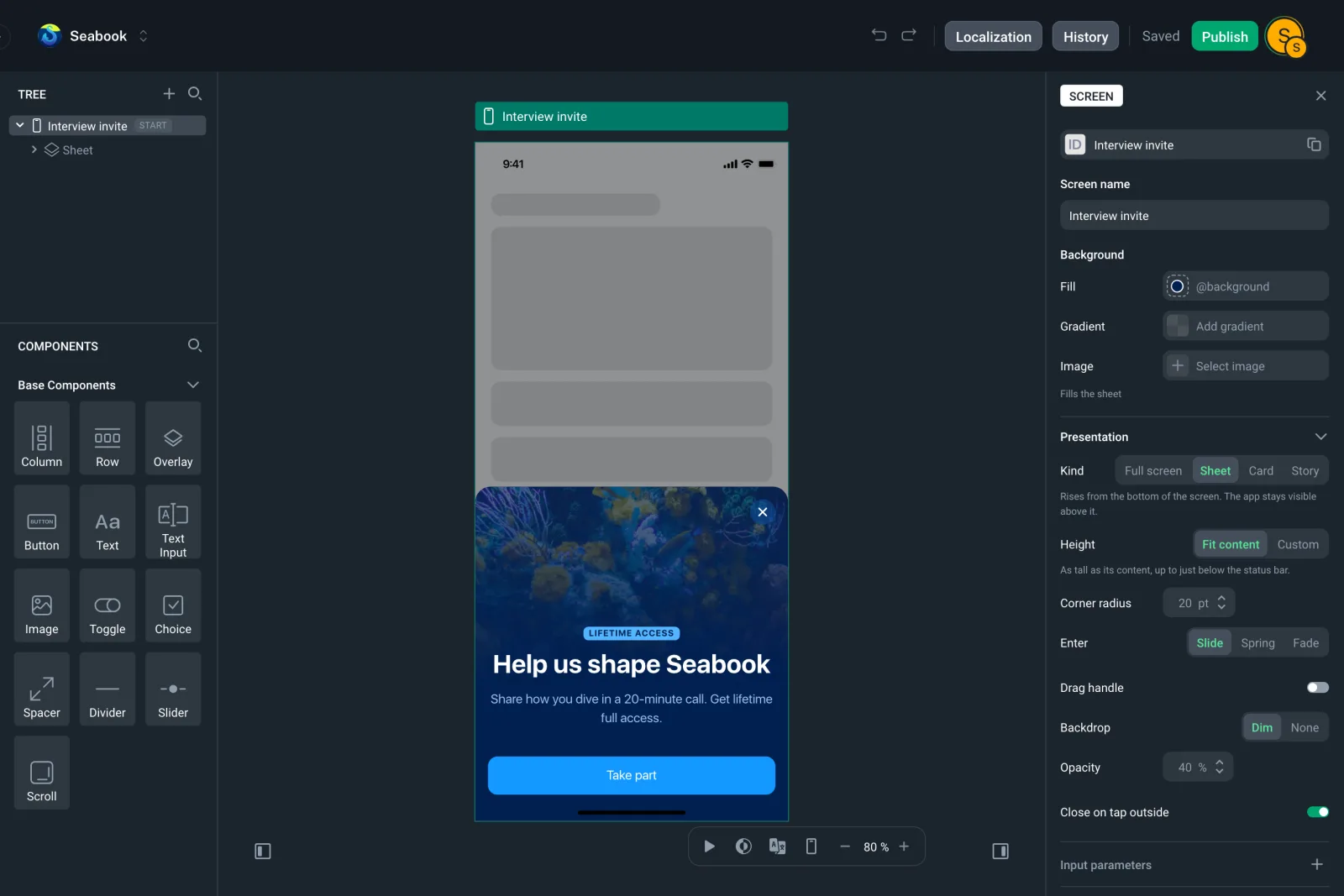
The sheet was built in Amply Studio to look like part of the app: Seabook's colours, its button, the reef photo from its paywall, its own round close button. One badge, one headline, two lines of copy, one button. It is translated into the app's 17 languages, and each translation was checked to fit in two lines on the smallest phone.
What to ask in the call
The same open, non-leading questions for everyone, so answers compare:
- How did you find the app?
- What were you looking for at that moment?
- Walk me through the last time you used it, from opening it to closing it.
Then listen. Don't pitch features and don't ask “would you use X”.
How to measure it
Taps are only the first step. Track the whole path: how many saw the invitation, how many tapped “Take part”, how many sent the email, how many calls happened — and what you changed because of them. Amply reports how many people saw the invitation and counts each button separately; the emails and calls you count in your inbox and calendar.
Stop when the answers start repeating. The rule of thumb Seabook was given: of every hundred people invited, expect around twenty to reach a call — and even five good conversations are a win.
Built in a day, without waiting for a release
The founder didn't build the campaign; two AI agents did, one on the app and one in Amply, while he reviewed screenshots and made the calls. His feedback came in plain words — “the photo should reach the top”, “a fade instead of a hard edge”, “a close button instead of Not now”, “no more than two lines” — and each round was live on his phone within minutes. Only the first step needed an app update; every change to the invitation after that went out without one.
What we'd tell another product team
- Test with testers first. Point the campaign at the new app version that only testers have, check it on real phones, then switch to the real audience before release.
- Give yourself a test switch. "Once per device" is right for customers and useless for testing. While testing, Seabook showed the invitation on every visit to the Profile screen.
- Expect a one-session delay. A newly launched campaign shows from the user's next session, not the one in which it arrives.
- Write for every language, not just English. Check each translation on the smallest phone before you publish.
- Don't send people into a loop. If the button leads to a screen that can also trigger the campaign, the invitation reappears.
Your checklist
- ☐ Make sure your app tells Amply who is a full-price subscriber.
- ☐ Decide the reward: lifetime access, a free year.
- ☐ Invite only engaged payers: several sessions, installed a while ago.
- ☐ Ask once, at session start; dismissing counts as an answer.
- ☐ Design the invitation in your app's own style: one button, two lines.
- ☐ Test with testers on an on-demand trigger, then switch to the real audience.
- ☐ Ask the same three open questions; stop when answers repeat.
The interviews are the work. Getting the right people to say yes doesn't have to be.
For your developers. Two small changes in the app: send subscription status to Amply whenever it changes, and add one link that opens a pre-filled email to your team. Everything else lives in Amply.